Thursday, August 6, 2020
Ludicrous, but All Too Common
Tuesday, July 14, 2020
Moving, NYC Style
Sunday, July 5, 2020
No Speed Limit Required
Please enjoy the following 'guest blogger', AKA Drake. He's having a unique NYC experience, but I can't say he's really enjoying it.
Driving and walking in Brooklyn are like living in two different dimensions of the same universe. They share the same landscape but perspectives and experiences are entirely different. The one commonality is the selfish attitude of, “All these other people out here are obstacles to my progress and are trying to get in my way”.
Until recently, I understood this only from the pedestrian viewpoint. Brooklyn drivers take dangerous liberties with my safety by turning quickly in front of me even though I have the Walk signal (“the little white man”) right of way. Now behind the wheel of my Avis rental, I begin to see the other side.
Our Brooklyn transportation experience was initially limited to public transport and walking. No car needed. Subways and buses are convenient here, and good old fashioned shoe leather fills in the gaps just fine. Covid-19 has changed all of that. Public transport suddenly became unsafe, so walking more is a necessity. In our case, a short bus trip plus a 0.2 mile walk from our apartment to our daughter's apartment (“our work place”) for nanny duties turned into a 1.1 mile walk each way. In the morning the walk was all downhill; but what goes down must go back up. The after work walk, all uphill, became a daily struggle. Even so, this was manageable until our daughter and son-in-law changed apartments, mostly to live in a better school zone for Cedric (or 27 pounds of joy as we now call him). Suddenly, a walking commute became a show stopper until we could make an apartment move ourselves. Thus, we have a rental car.
Everything looks different in the driving dimension. The sort of casual observations while walking cannot happen for the driver. For starters, pedestrians sometimes cheat at crosswalks, daring the approaching vehicle to maintain speed, or just wander out no matter the “little red hand” telling them to stop. The vehicle density on the streets is high and movements are chaotic. There are cars, trucks, construction vehicles, delivery vans, ambulances, fire trucks, garbage trucks, street sweepers, motorcycles, bikes, joggers, and even miscellaneous vehicles like skateboards and electric powered scooters all jockeying for street space and competing to make the next light. Lane-blocking construction zones are numerous and potholes are everywhere. Avoiding potholes is a hit or miss proposition depending on the density of traffic. Since curb parking spaces are in such short supply, every block seems to have at least one double parked car (hopefully with hazard lights on) to make things even more challenging. The level of concentration and need for constant maneuvering makes me think car racing must be something like this.
There’s not a single speed limit sign around downtown Brooklyn or the surrounding neighborhoods. Speed is easily controlled by the congestion. Speed limit reminders are simply not needed. As a result, everybody drives as fast as possible. When the city was in shut down mode because of the virus, we observed bus drivers and delivery truck drivers hauling ass. One silver lining of the damn virus was people who deal with this hideous traffic each and every day experienced a few months of impediment free joyful driving.
Fortunately, this driving torture is temporary. As soon as we move into a more conveniently located apartment, the car goes away and we'll be back to our slower paced walking. Foot power will have to do while the virus crisis is still with us before we can broaden our reach using public transit again.
Sunday, June 14, 2020
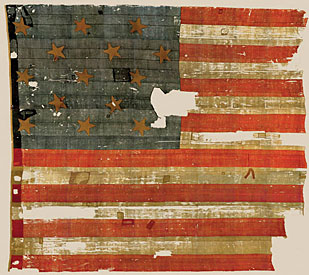
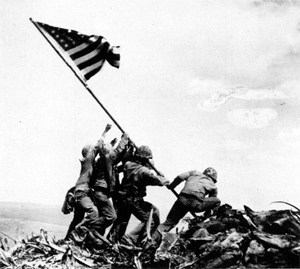
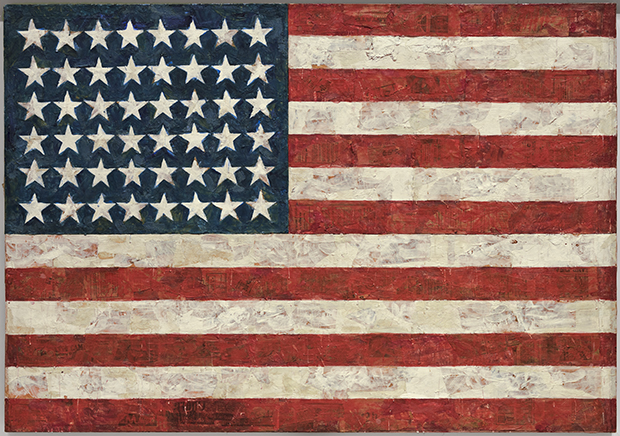
Flag Day


Saturday, June 6, 2020
New York City in a Time of Protest
Living in New York City, people expect you to be a complete expert on everything happening in this city. Well, considering it’s the center of the pandemic, and also, is a very visible part of the massive protests going on for racial equality in policing, people are sending me emails, texts, and phone calls worrying if we are ‘safe’ and asking what’s happening. Here are my observations as to what is happening in Brooklyn. To put things in context, I live within a mile of the Barclay Center, a focal point of some of the largest protests in Brooklyn.
On top of lock down with people in close living quarters, and the stress of rising unemployment as a result of the pandemic, here come the protests over systemic
racial injustice in policing procedures. Most New Yorkers are torn
as to the protests. There's widespread support. Drake and I can feel an air of excitement and commitment on the streets. At the same time, people are fearful about the virus resurging, and I
think there will be a resurgence because, while some people are wearing masks during the protests, the six foot social distancing which is to pair with the masks isn't being observed. The protesters are mostly young (20 -
30), and many of them feel invincible. Others are the workers who have
been exposing themselves daily during this entire pandemic crisis. And,
others feel the cause is too important to stay home and be silent.
Finally, most New Yorkers live a large portion of their lives in public: the parks, the
neighborhood gardens, the bars, and the restaurants. You know how people
are - they will only sacrifice so much for so long. And, they are just
tired of being pent up since their places for going out are all closed. The protests are giving people a place to be 'out'.
I am afraid the infection rate among the black and
minority populations is going to increase even more as a result of the protests. They live
proportionately in more crowded housing, spend more time on public transit, have
lesser health care, and have ‘essential’ jobs which have put them out in public
or on factory floors when everyone else was sheltering in place. As a result, the African-American and Latino
communities are suffering a greater infection/death rate. If you want the
numbers, and these are facts, not opinions, check out this website
Case in point that’s close to home: Sarah and Jay went to a protest (on the
fringes) staying more than six feet away from people. The protest was in front of a church at
the end of their block this past week. They were carrying the 4’x6’ foot sign they have
hanging in front of their apartment which says, END WHITE SILENCE. They
took Cedric in his stroller. This is an
example of what I'm talking about. I had to laugh when
Sarah said, "I've never been to the start of a protest before" since it brought back memories for me. They did immediately leave as the crowd swelled, so maybe, maybe they
limited their virus exposure, BUT they do feel strongly about this issue. I respect that. Protest is a decision of the conscience.
I remember the protests against the Vietnam war at
ultra-conservative
I wish I was out protesting today, but with the
rate of viral infections in my age group that would be tantamount to suicide.
Having worked with many black colleagues as well as my final teaching job being
at the 'black high school' - yes, Fort Worth was like Tulsa, with racial groups
segregated by location, I can tell you I've been talking and thinking about the
inequality of policing for more than 20 years. I heard women
(other teachers) talking about how to try and protect their sons from being
arrested, beaten and even killed by the police for simply driving a car in the
wrong neighborhood . They talked about teaching strategies to their
children when seeing a policeman. And, it wasn't 'the police are our
friends'. These were educated, middle class people of color - not poor,
indigent, drug using low lives. I heard my students, particularly the
boys, talk about their own fears or strut around (as only a 15 year old boy
with new muscles can) as to what they would do if confronted by 'cops'.
Too many stories. Too many pinched faces of worried women for me to
discount the reality of systemic police violence against blacks.
Once again, we are confronting the great American
problem: Race. We surely do love our pecking orders, and for 300
years, the color of your skin has been one of the pecking order
yardsticks in this country. Hard to overcome that. Some commentators are seeing
these protests as the tip of a sea change in the
In
The problem in New York is the same as in other police departments around the country. There's a legally sanctioned lack of accountability and transparency to the public on the part of the police when misconduct is involved. (In New York the statute that protects habitually delinquent policemen from accountability is called 50-a. You can google it.) When everyone starts at a level of distrust, it's very easy for any given situation to get out of hand. That said, the Bronx, Brooklyn and Manhattan District Attorneys do not plan to prosecute protesters for breaking the curfew. If you loot or threaten violence, you will be prosecuted. In total in 10 days of protests in all of New York City where thousands of people have been out on the streets every evening, there have only been 2000 arrests across the five boroughs - the majority of which fall into the non-violent/non-looter category. The majority of the police as well as the majority of the protesters have been peaceful. To suggest otherwise is simply not factual. I live in a neighborhood that is not white. I don't feel unsafe.
The true dilemma is where to go from here. How do you translate the passion for true change into reality? On Monday, New York City starts re-opening. On June 23rd there's a statewide primary election. Hopefully, the passion on the streets will continue onto a path to the ballot box.
Sunday, May 31, 2020
Typing Revolution


Tuesday, May 5, 2020
Crystal Ball Time
Checking that restlessness is the grim news the limited testing/antibody testing in this city is showing: There's a 25% infection rate in New York City. I think this is due to two factors: The density of the population - lots of people in a small amount of space, and the slowness of the Federal and State governments to grasp the rapidity of the spread of the virus. Drake thinks with proper handling initially, we would not be in our current state.
I think what we all want to know is what's going to happen in the future. One set of epidemiologists have three possible scenarios. None of them is particularly comforting. Even the rosiest suggests this problem isn't going to be gone quickly.
What I've been pondering (and Drake too), is what are the take-aways from this pandemic disaster/debacle. Here's a bullet list of what we've thought about in no particular order:
1) The gulf between the 'haves' and 'have nots' isn't just something talked about - it's visible.
2) Maybe teachers will finally get some respect. Parents are getting an up close and personal experience with teaching and even student management! It's not so easy, is it?
3) More people can work 'on-line' than previously thought, and the population could be re-distributed back across the country. Maybe you can go home again.
4) Now we know where there's no internet access, and lack of internet is crippling those areas. Access to technology is critical in a society transitioning into the electronic age.
5) Is the birth rate going to go up? Is the divorce rate going to go up? Will the obesity/diabetic numbers inch up even more?
6) Close confines breeds domestic violence.
7) The safety net held together by chewing gum, baling wire and hope is in tatters.
8) Is it time for UBI? (Universal Basic Income). I didn't even know what this really was until I read an article by Nathan Heller. The idea goes all the way back to the 17th century, and nobody is really sure if it's a good idea or not!
9) You can't spend years gutting basic scientific research and development and not expect to have that shortsightedness bite you on the ass.
10) Nobody knows how many unemployed there really are as a result of the pandemic, and how many there will be as the economy totters toward recovery.
11) The closure of the churches may be the final death knell for some of the major denominations which were already in decline.
12) If you were in doubt before, you know now major corporations are only out to benefit their shareholders. They could care less about their workers. They have been firing them, furloughing them, and cutting off benefits at a time when they are needed most - especially workers at the lowest level jobs. Very few CEO's or other upper management are really making much of a sacrifice - some are cutting their 'base' salary by a small percentage for a couple of months.
13) If you compare the things in common of all live in partners (no matter what legal status), we are getting a crash course in how much intersection we have in a Venn Diagram of our relationship. [you can google this if you are confused as to what exactly is a Venn Diagram.]
14) Who knew reading could be so much fun?
15) Have you been reduced to asking for binge worthy TV shows from friends?
16) Everything can be bought on line; however, delivery is a different story.
17) The rituals of weddings and funerals and birthdays mean more than we thought they did
18) I find myself praying for a 'lite' tornado and hurricane season.
19) I having a rising frustration level over being able to find facts rather than opinions in the media about this crisis. I long for Walter Cronkite, Peter Jennings, and Tom Brokaw. At least I knew what they reported had been fact checked before they told me.
20) I'm going to value exercise more in the future.
I'm sure I could continue on and on and on with observations about how this virus has affected our lives today, and what the outcomes will be in the future. I welcome any feedback as to something you think I've missed.